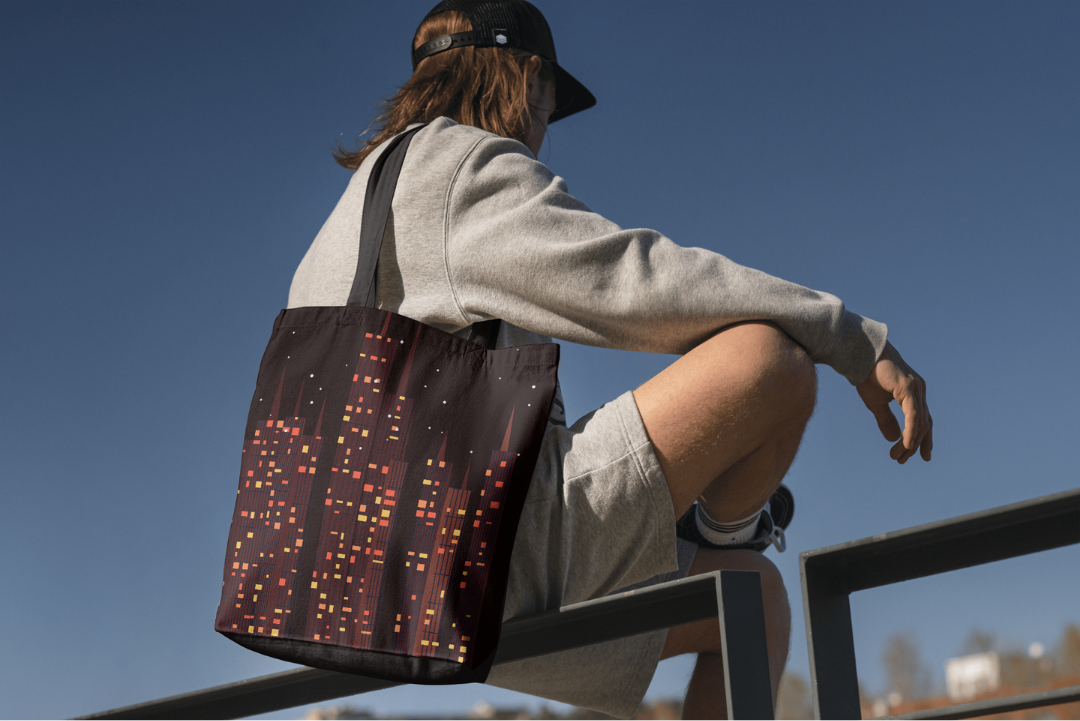
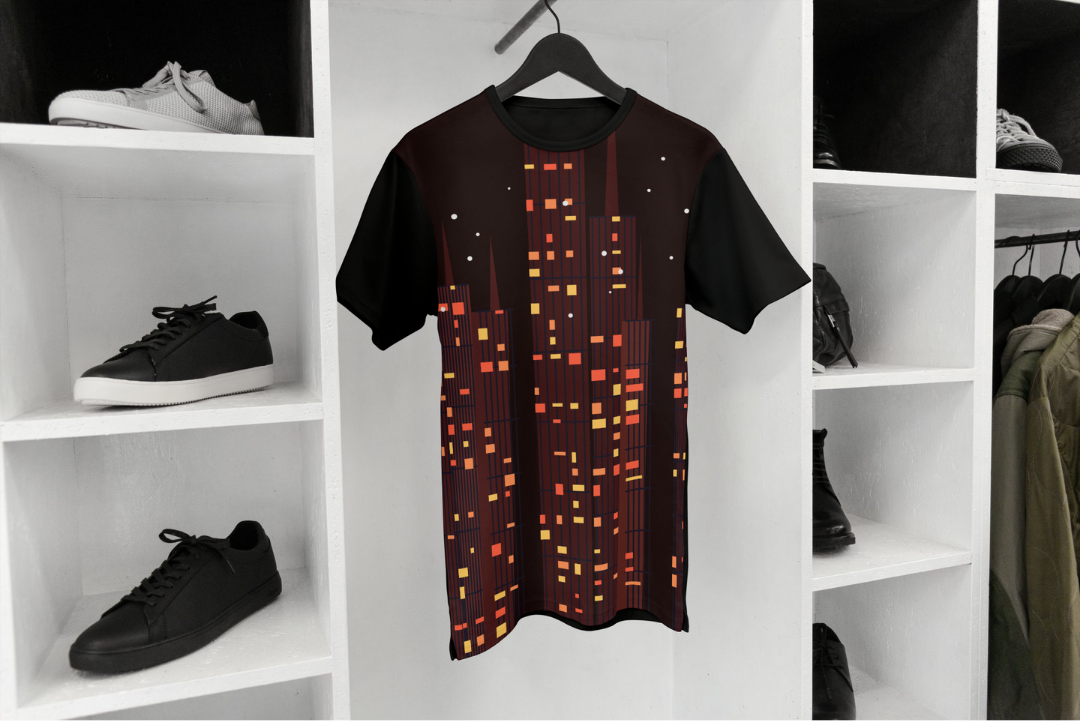
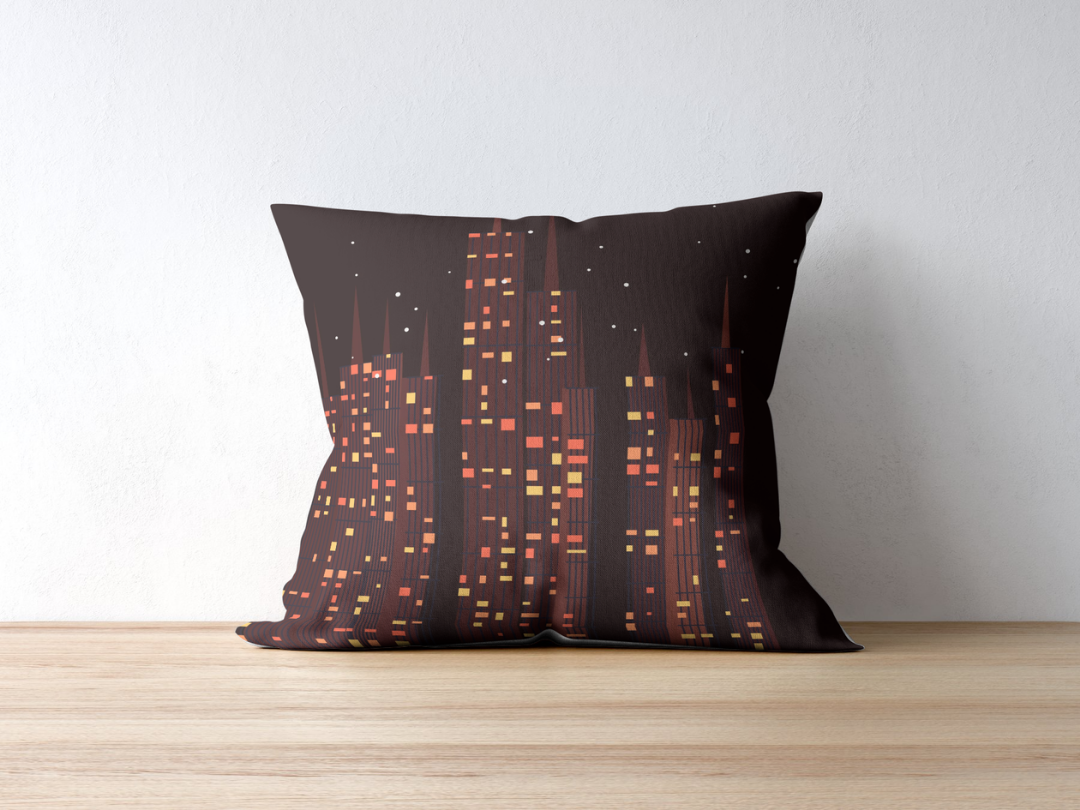
A city drawn from a grid becomes
a surface with its own weather.
I am an Iranian-born artist working at the intersection of
classical textile logic and generative systems. My work
begins with a simple observation: the woven surface —
repetitive, mathematically structured, infinitely variable —
has always been a form of computation, long before computers.
Skyline Series renders eight themed
cityscapes, each with its own palette, its own sky tint,
and its own window logic. A seed picks one of the eight
themes, then lays a field of buildings across the canvas —
each with vertical and horizontal facade lines, gridded
windows in checker, stripe, diamond, or random pattern,
and a spire that rises above the roofline at a
theme-determined probability.
Behind the buildings: a scatter of faint stars, and a
wash of outline shapes — triangles, diamonds, polygons —
that read as clouds, constellations, or distant ads. The
result sits between poster and print, urban and woven.
Each piece is defined by a numeric seed and can be
regenerated, documented, and adapted for textile,
print, and surface applications.
On AI tools — where I encountered technical
obstacles, I turned to AI tools for debugging and code
optimization. Every structural, aesthetic, and conceptual
decision remained my own.