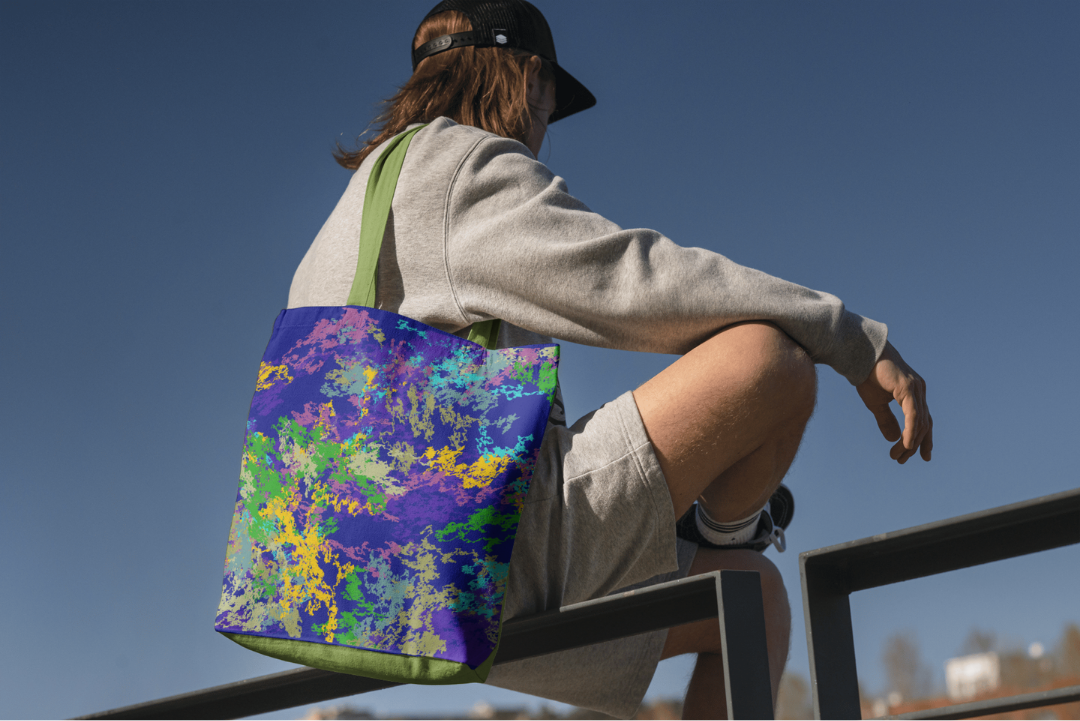
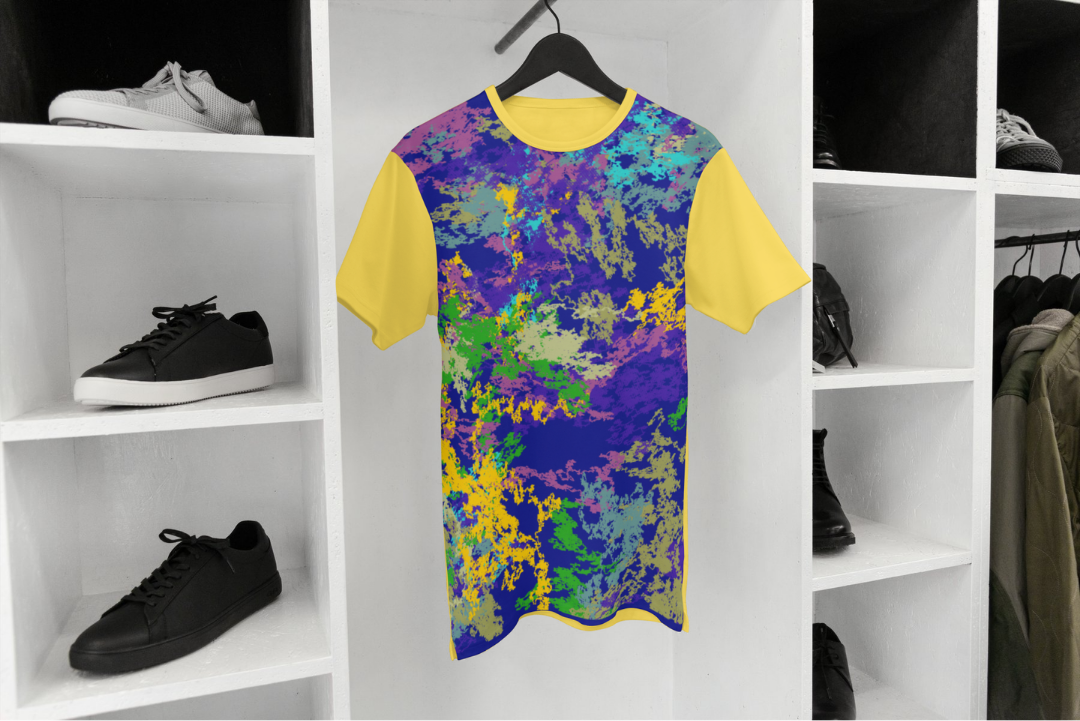
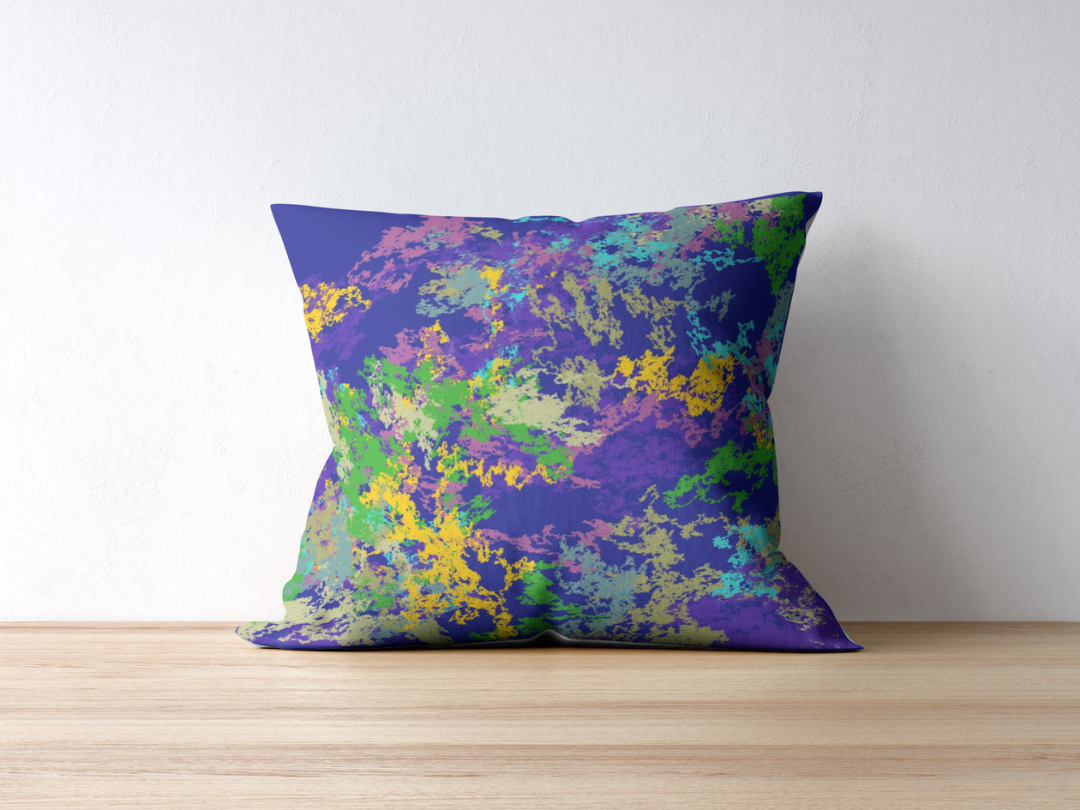
A walk that never crosses its own path is not truly random —
it is polite.
I am an Iranian-born artist working at the intersection of
classical textile logic and generative systems. My work
begins with a simple observation: the woven surface —
repetitive, mathematically structured, infinitely variable —
has always been a form of computation, long before computers.
Polite Brownian Motion takes the classical
random walk and bounds it. Instead of letting the path
wander freely, it constrains every step inside a margin —
so the walkers drift, but they do not escape. Each palette
runs its own set of walks across the field, layered at
different rotations, until the composition becomes a
luminous mesh of overlapping trajectories.
Twelve palettes meet on a single dark ground. Each palette
contributes its own walker, its own step-length, and its own
rotation phase. Together they generate a form that reads as
textile — repetitive, structured, and yet never quite the
same twice. Each piece is defined by a numeric seed and can
be regenerated, documented, and adapted for textile, print,
and surface applications.
On AI tools — where I encountered technical
obstacles, I turned to AI tools for debugging and code
optimization. Every structural, aesthetic, and conceptual
decision remained my own.