A neon light does not draw a line —
it bleeds into the air around it.
I am an Iranian-born artist working at the intersection of
classical textile logic and generative systems. My work
begins with a simple observation: the woven surface —
repetitive, mathematically structured, infinitely variable —
has always been a form of computation, long before computers.
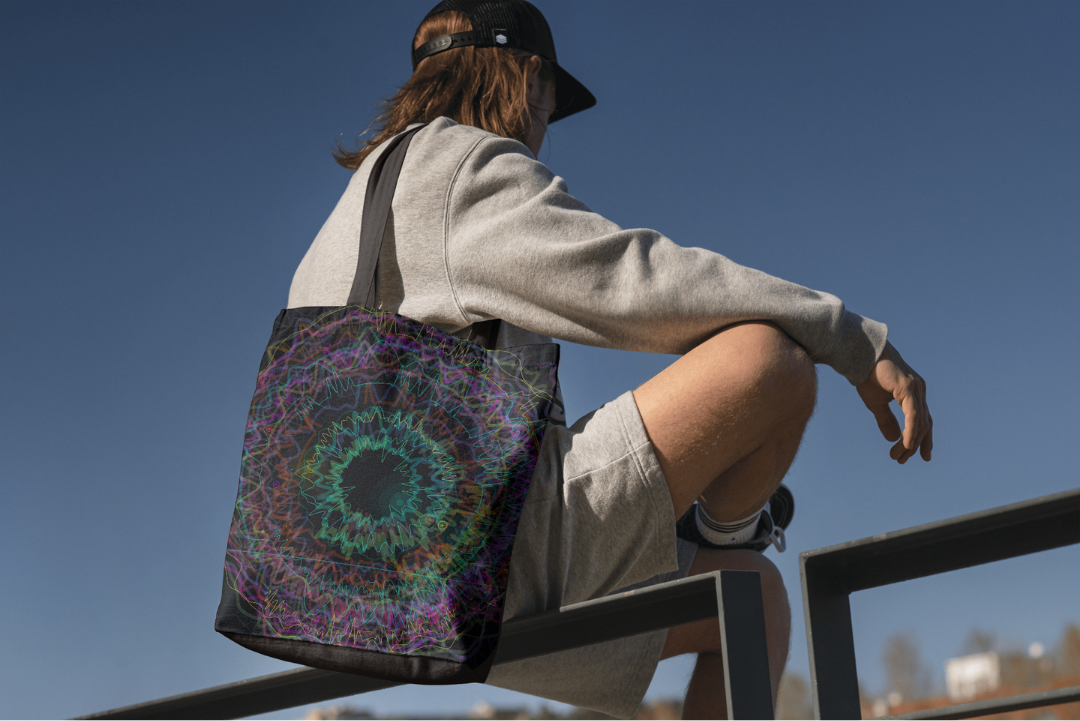
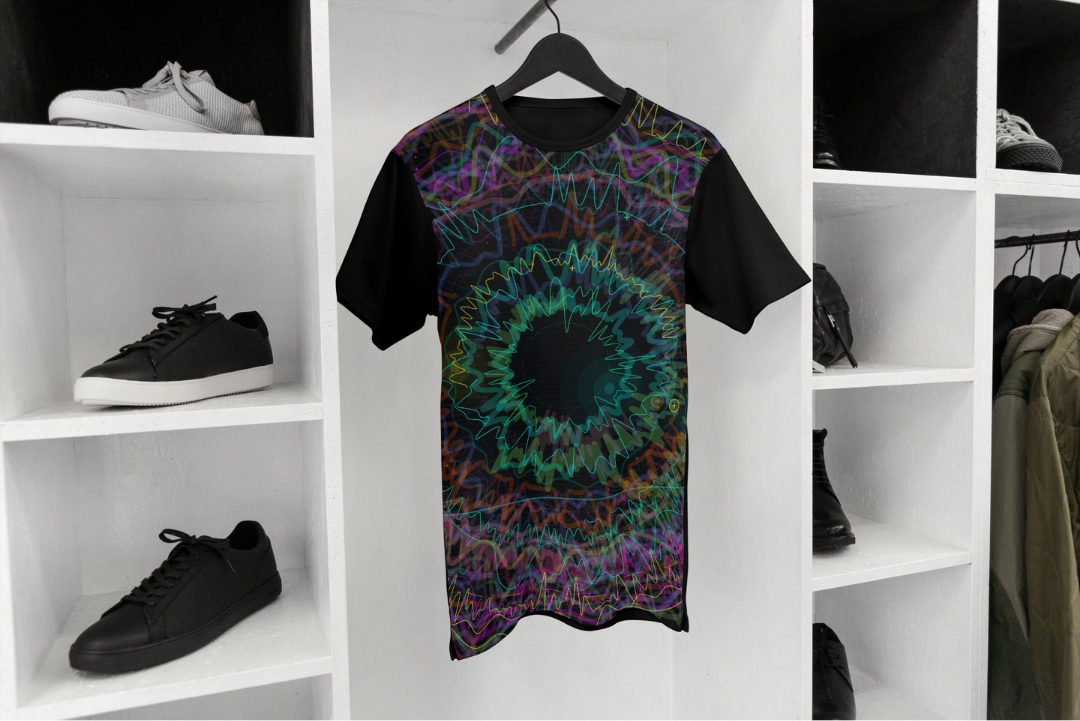
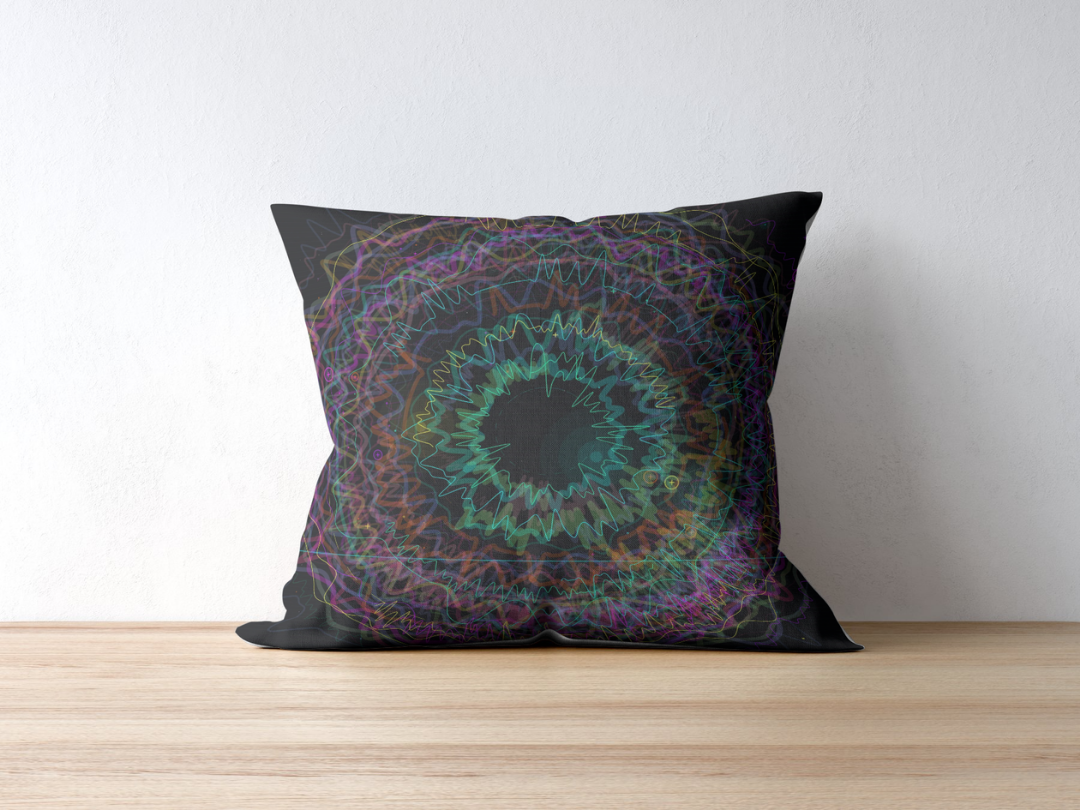
Neon Arcade is a study in layered light.
Twelve to twenty-four arcs are drawn at random radii and
angular spans; each one wobbles according to its own
pattern — a sine, a power-sine, a random spike, a
composite. Each arc is drawn multiple times with decreasing
weight and increasing alpha, producing a neon glow.
Behind them: a dense starfield, a shower of neon particles,
and a set of lens flares. In front: a mesh of faint green
scanlines. The result is a composition that reads as a
night sky or a signal rather than a
drawing. Each piece is defined by a numeric seed and can
be regenerated, documented, and adapted for textile,
print, and surface applications.
On AI tools — where I encountered technical
obstacles, I turned to AI tools for debugging and code
optimization. Every structural, aesthetic, and conceptual
decision remained my own.