Variation
A numeric seed initializes the grid dimensions (3–40), the background colour, the foreground palette, and every rectangle offset. Each output is regenerated and documented as a distinct, traceable work.
A grid of stacked rooms — each cell a nested frame of glowing rectangles, offset and coloured from a single seed.
For fashion houses, textile studios and surface designers. Each composition is generated from a numeric seed and can be licensed, adapted or commissioned to your brief.
A room is a frame — and a frame drawn inside itself never quite stays in place.
I am an Iranian-born artist working at the intersection of classical textile logic and generative systems. My work begins with a simple observation: the woven surface — repetitive, mathematically structured, infinitely variable — has always been a form of computation, long before computers.
Mad Rooms begins with a grid — between three and forty columns, three and forty rows. Each cell is filled with a stack of rectangles, each drawn with a slightly different offset from its neighbour. The offsets are seeded; the strokes glow; the colours shift from one rectangle to the next.
What emerges is a field of rooms within rooms — frames that repeat without aligning, patterns that read as textile while remaining entirely algorithmic. Each piece is defined by a numeric seed and can be regenerated, documented, and adapted for textile, print, and surface applications.
The same seed, presented as an archival print — and applied across fabric, scarf, textile and wall surfaces without loss of structure.
Every surface below is drawn from the same numeric seed — its repeat, orientation and scale adapted to the material, while the underlying structural logic remains identical.
A numeric seed initializes the grid dimensions (3–40), the background colour, the foreground palette, and every rectangle offset. Each output is regenerated and documented as a distinct, traceable work.
Each cell contains between 1 and 9 rectangles, drawn as concentric frames with seeded offsets. A glowing stroke traces each rectangle; the colour is chosen per rectangle from the foreground palette.
The resulting composition becomes a surface-design asset — explored across garments, textile prints, wallpaper and other pattern-driven applications.
Mad Rooms is a generative design system rather than a single artwork. Its layered-grid language can be adapted for fashion, textile development and other surface-oriented contexts — while maintaining a computational origin.
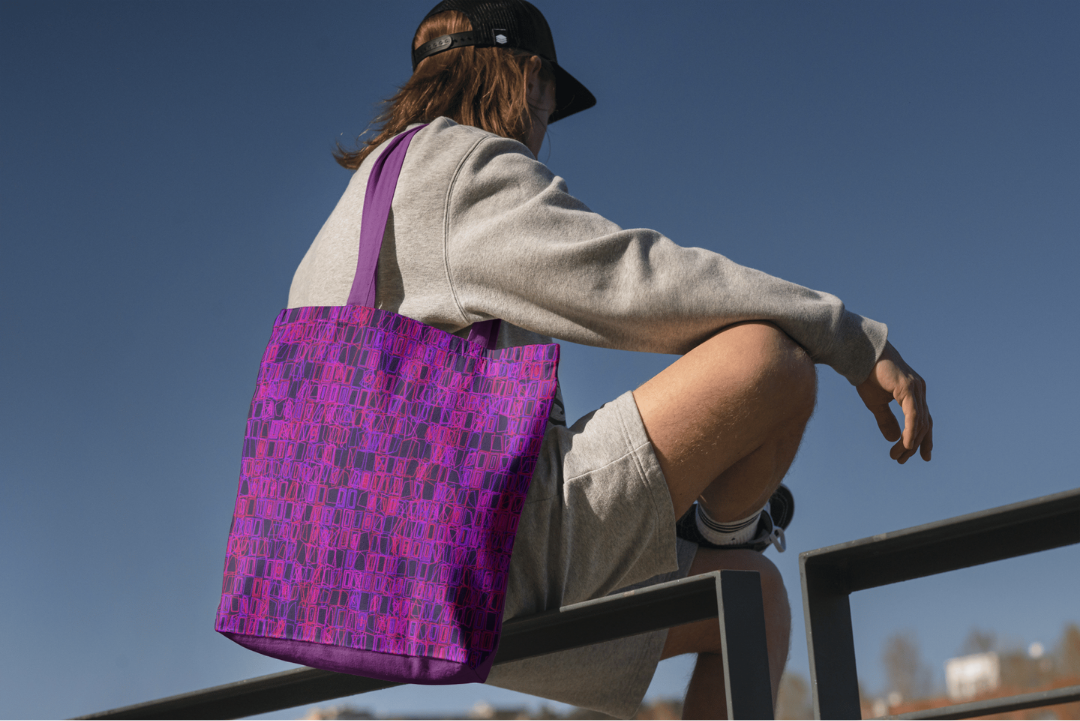
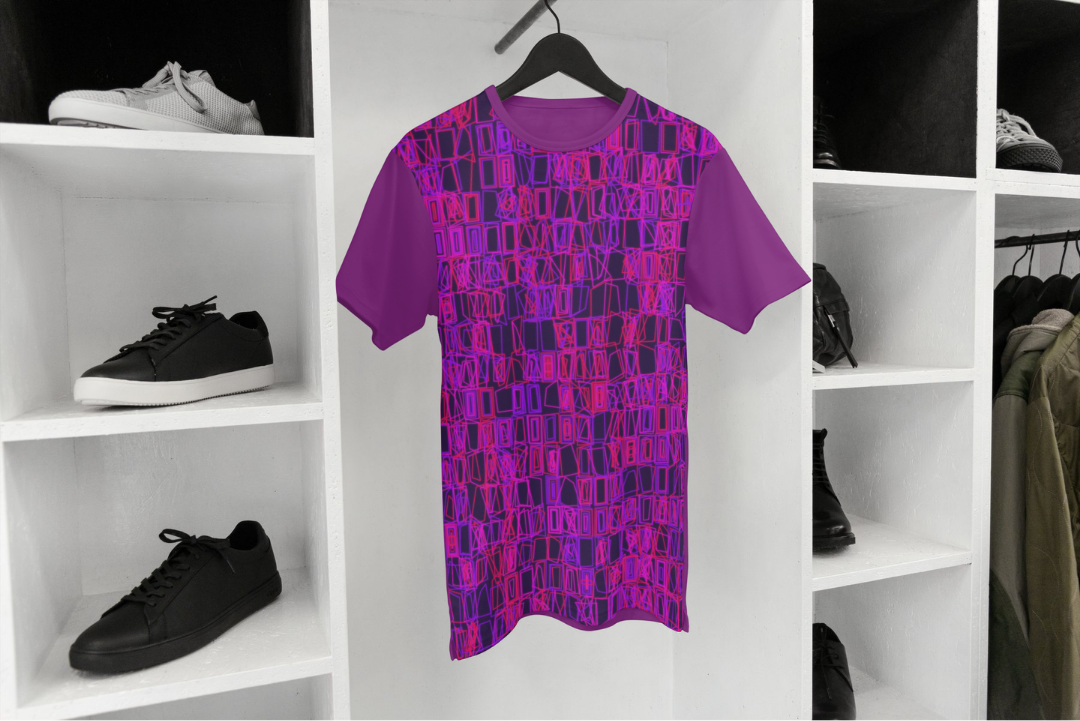
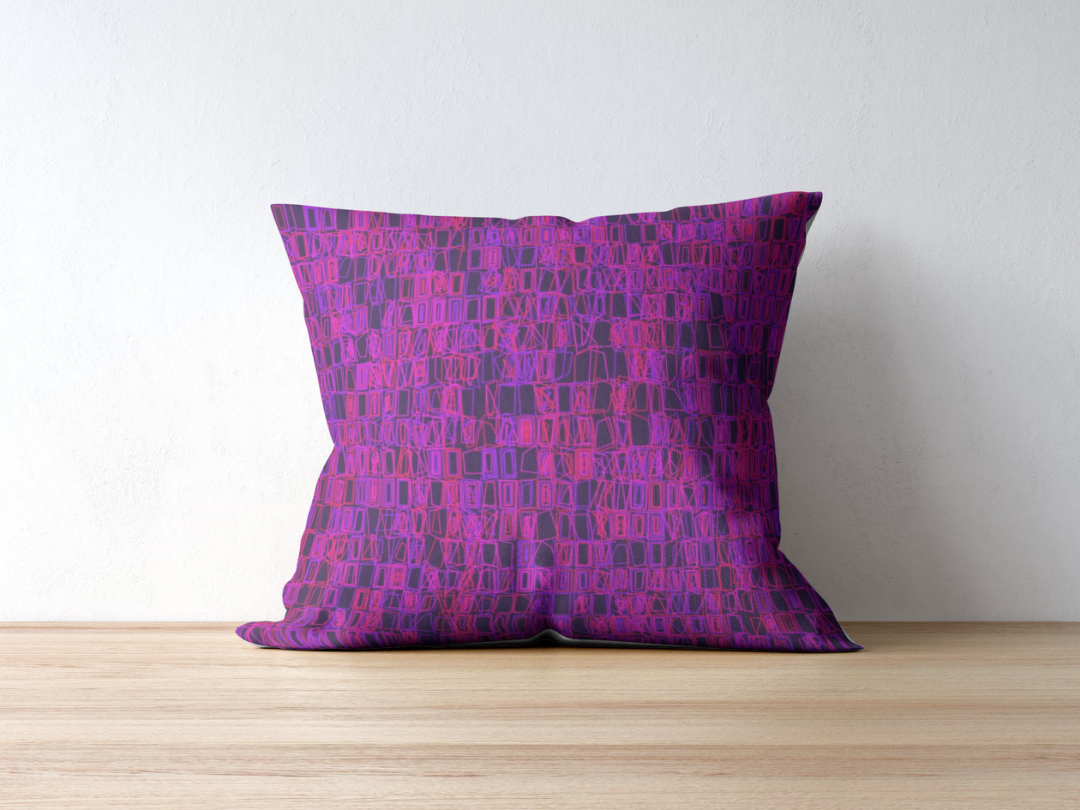
Each surface is drawn from the same numeric seed — reproducible, licensable, adaptable to your brief.