Measured Ground
The bottom layer is a regular grid: vertical and horizontal lines at 2.5% of canvas spacing, extending to a 5% margin from each edge. It reads as graph paper or drafting sheet — the ground on which the other layers sit.
A regular grid, 6–8 organic random-walk curves, and 3–5 sets of concentric circles — all drawn in black on white. Between architectural notation and Op-art.
For fashion houses, textile studios and surface designers. Each composition is generated from a numeric seed and can be licensed, adapted or commissioned to your brief.
Three layers of line become a drawing with its own notation.
I am an Iranian-born artist working at the intersection of architectural drawing and generative systems. My work begins with a simple observation: the diagram — measured, layered, infinitely variable — has always been a form of computation, long before computers.
Layered Diagram renders three distinct layers on a white ground. First, a regular grid of vertical and horizontal lines at 2.5% spacing. Second, 6–8 organic curves, each built by a random walk that drifts across the canvas in smooth angular steps. Third, 3–5 sets of concentric circles, each set centred at a random point and drawn with slight radial variance.
The layers sit on top of each other without hierarchy — none is primary, none is secondary. The result reads as a drawing in three registers at once: measurement, motion, and structure. Each piece is defined by a numeric seed and can be regenerated, documented, and adapted for print, textile, and surface applications.
The same seed, presented as an archival print — and applied across fabric, scarf, textile and wall surfaces without loss of structure.
Every surface below is drawn from the same numeric seed — its repeat, orientation and scale adapted to the material, while the underlying structural logic remains identical.
The bottom layer is a regular grid: vertical and horizontal lines at 2.5% of canvas spacing, extending to a 5% margin from each edge. It reads as graph paper or drafting sheet — the ground on which the other layers sit.
6–8 curves are drawn as random walks. Each begins at a random point inside the margin and takes 100 steps of radius 0.3–0.8% of canvas. At every step, the walker's angle changes by a small random amount, producing smooth, organic, hand-drawn-looking paths.
3–5 sets of concentric circles are placed at random centres. Each set contains 3–5 rings at increasing radii, drawn with slight radial variance so no ring is perfectly circular. The result reads as a lens, a target, or a topological contour.
Layered Diagram is a generative design system rather than a single artwork. Its linework language can be adapted for fashion, textile development and other surface-oriented contexts — while maintaining a computational origin.
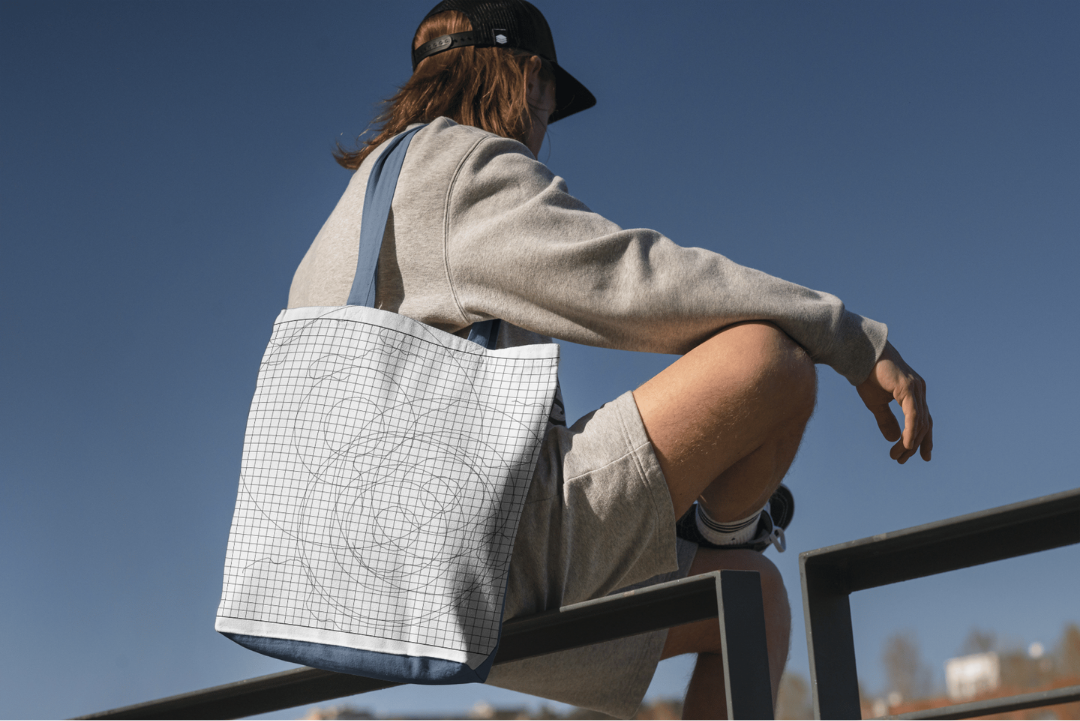
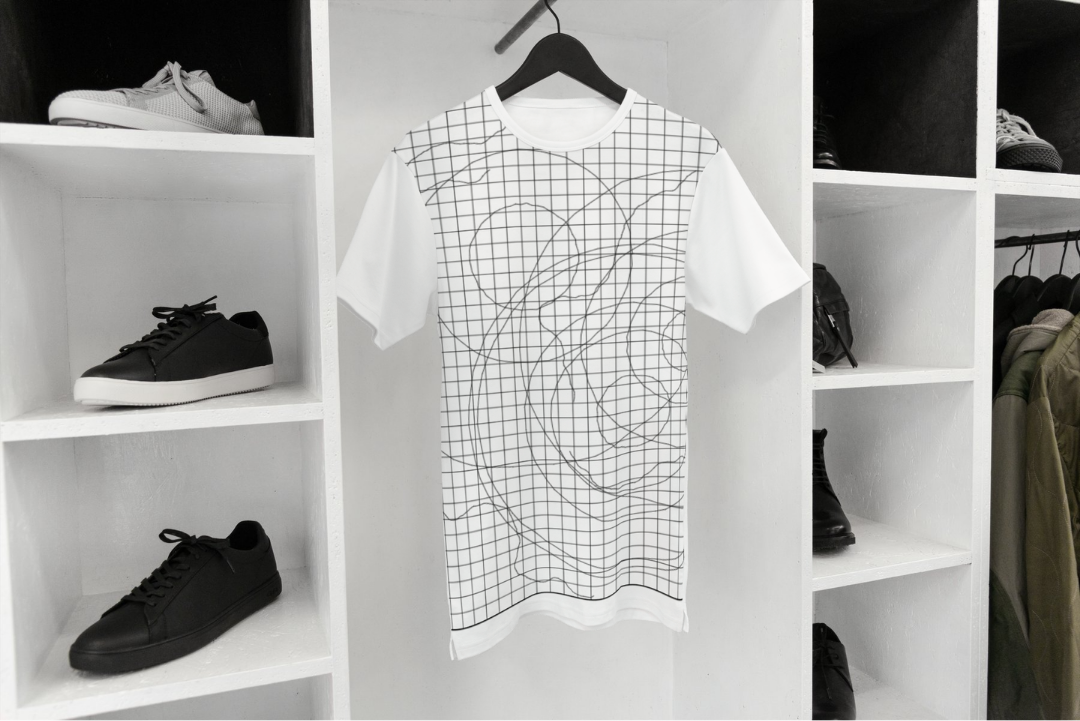
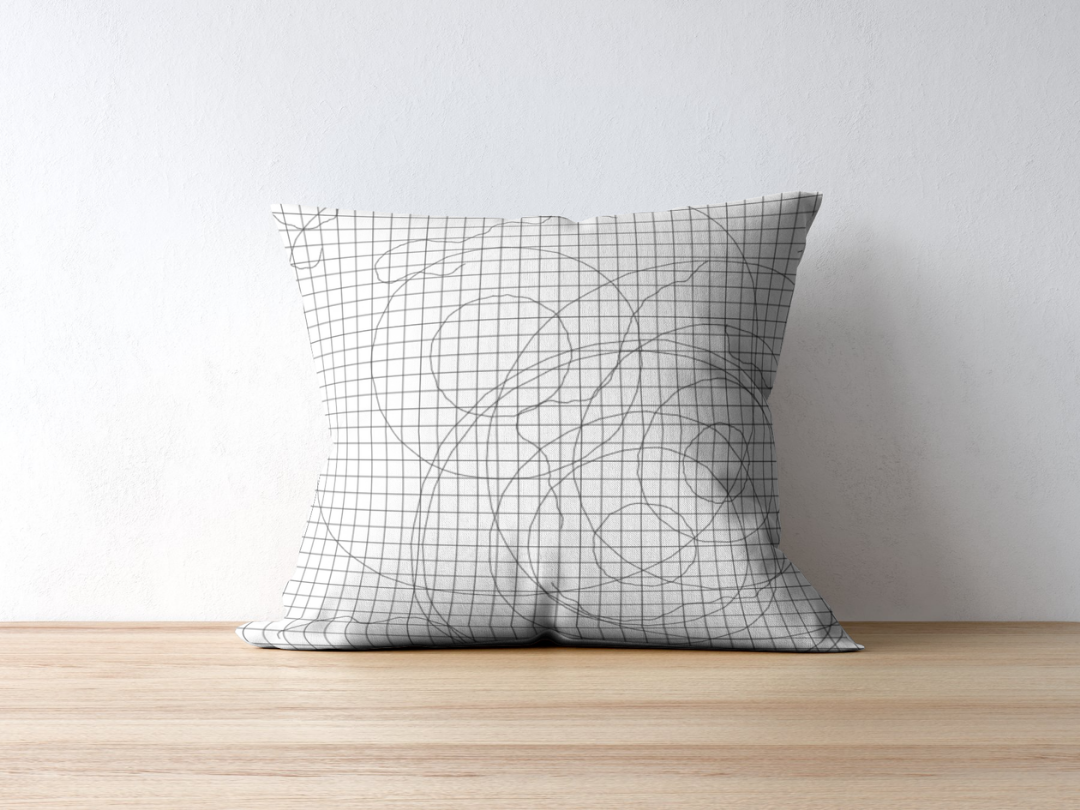
Each surface is drawn from the same numeric seed — reproducible, licensable, adaptable to your brief.