An old motif, repeated without end,
becomes a surface with its own breath.
I am an Iranian-born artist working at the intersection of
traditional ornament and generative systems. My work begins
with a simple observation: the repeated motif — wave, star,
scale, mesh — has always been a form of computation, long
before computers.
Japanese Patterns renders eight traditional
Japanese motifs — Seigaiha (waves), Asanoha (hemp leaf),
Shippou (seven treasures), Kikkou (tortoise shell),
Sayagata (interlocking keys), Uroko (fish scales),
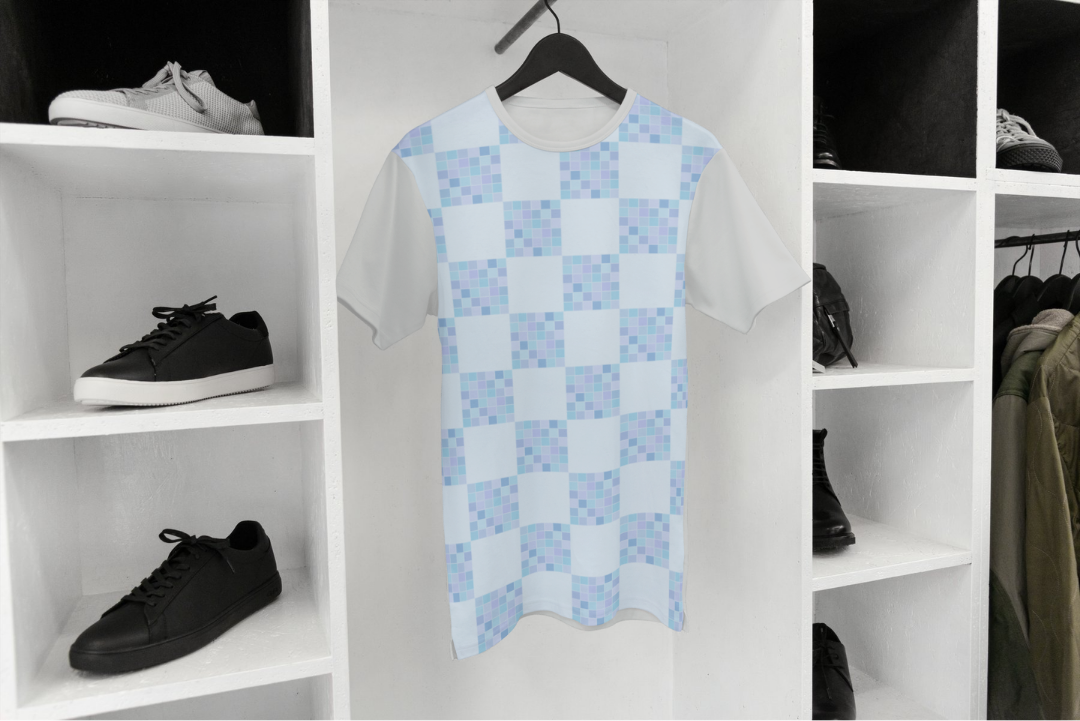
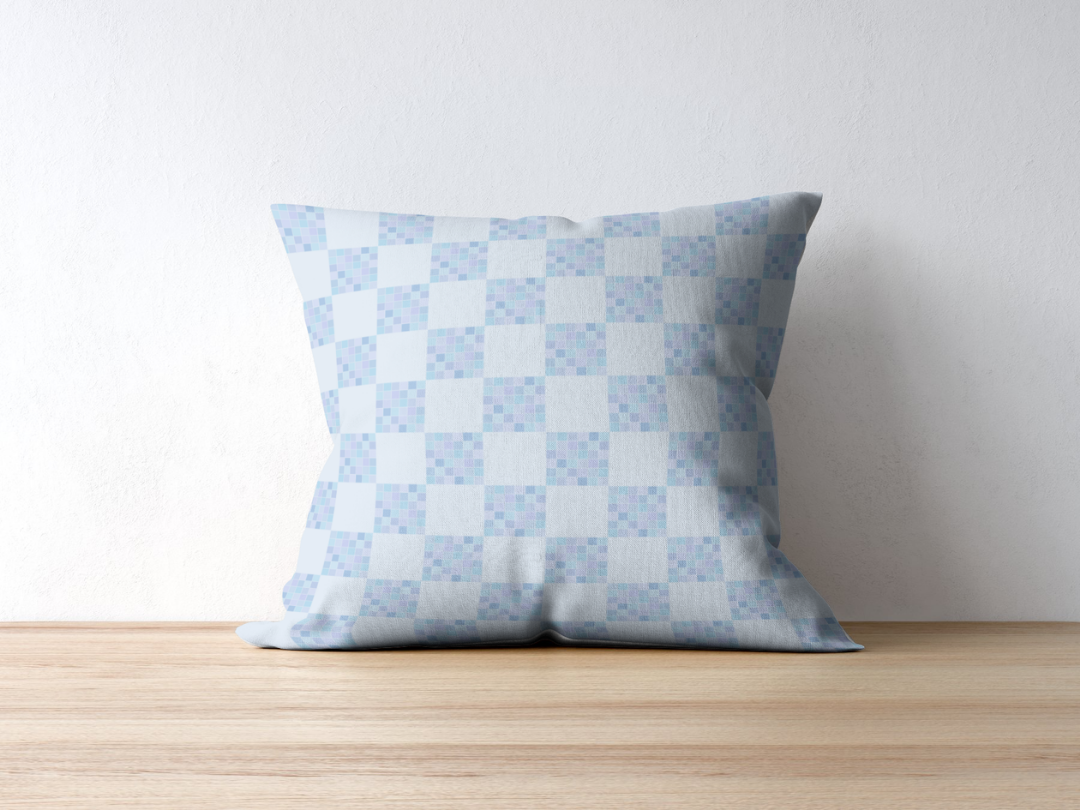
Tatewaku (rising steam), and Ichimatsu (checkerboard) —
on a 60 × 60 grid. Each motif has its own shape vocabulary
and its own distribution rule.
A soft palette is drawn from one of six curated colour
sets — blues, greens, earth tones, purples, ocean blues,
or sunset tones — and rendered at three levels of
transparency. A subtle gradient and occasional outline
give the composition depth. Each piece is defined by a
numeric seed and can be regenerated, documented, and
adapted for print, textile, and surface applications.
On AI tools — where I encountered technical
obstacles, I turned to AI tools for debugging and code
optimization. Every structural, aesthetic, and conceptual
decision remained my own.