Variation
A numeric seed picks two colours from a palette of sixteen, the grid dimensions (10–159 columns), and every cell's value (−450 to 450). Each output is regenerated and documented as a distinct, traceable work.
A field of grid cells, each carrying its own value — rendered as a two-tone gradient drawn from a shared palette.
For fashion houses, textile studios and surface designers. Each composition is generated from a numeric seed and can be licensed, adapted or commissioned to your brief.
A grid is not a picture of order — it is a way to organise chaos.
I am an Iranian-born artist working at the intersection of classical textile logic and generative systems. My work begins with a simple observation: the woven surface — repetitive, mathematically structured, infinitely variable — has always been a form of computation, long before computers.
Gradient Grid takes the grid as a field of values. Every cell carries a seeded number between −450 and 450, and that number is mapped to a position along a linear gradient running between two colours drawn from a palette of sixteen. The grid itself is invisible; only the gradient remains.
What emerges is a field of light — a surface that reads as fabric, screen, weather map, or terrain depending on the palette the seed chooses. Each piece is defined by a numeric seed and can be regenerated, documented, and adapted for textile, print, and surface applications.
The same seed, presented as an archival print — and applied across fabric, scarf, textile and wall surfaces without loss of structure.
Every surface below is drawn from the same numeric seed — its repeat, orientation and scale adapted to the material, while the underlying structural logic remains identical.
A numeric seed picks two colours from a palette of sixteen, the grid dimensions (10–159 columns), and every cell's value (−450 to 450). Each output is regenerated and documented as a distinct, traceable work.
Every cell's value is normalised to 0–1 and used to interpolate between the two palette colours. The cell is then filled with the interpolated colour. The grid is invisible — only the gradient field remains.
The resulting composition becomes a surface-design asset — explored across garments, textile prints, wallpaper and other pattern-driven applications.
Gradient Grid is a generative design system rather than a single artwork. Its noisy-gradient language can be adapted for fashion, textile development and other surface-oriented contexts — while maintaining a computational origin.
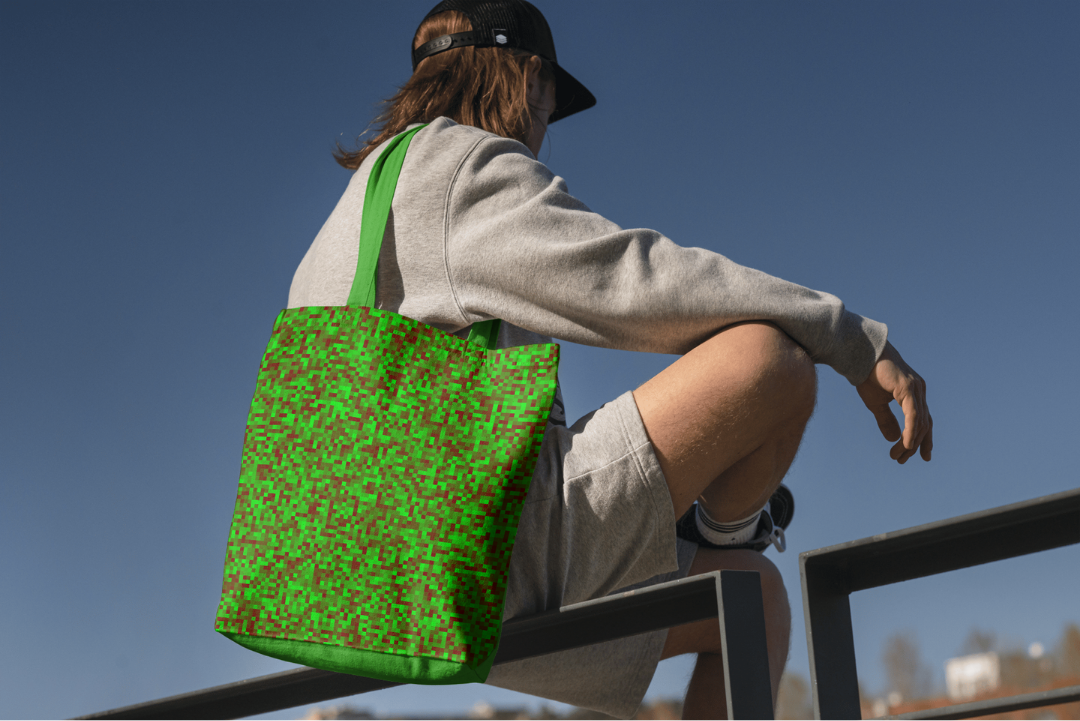
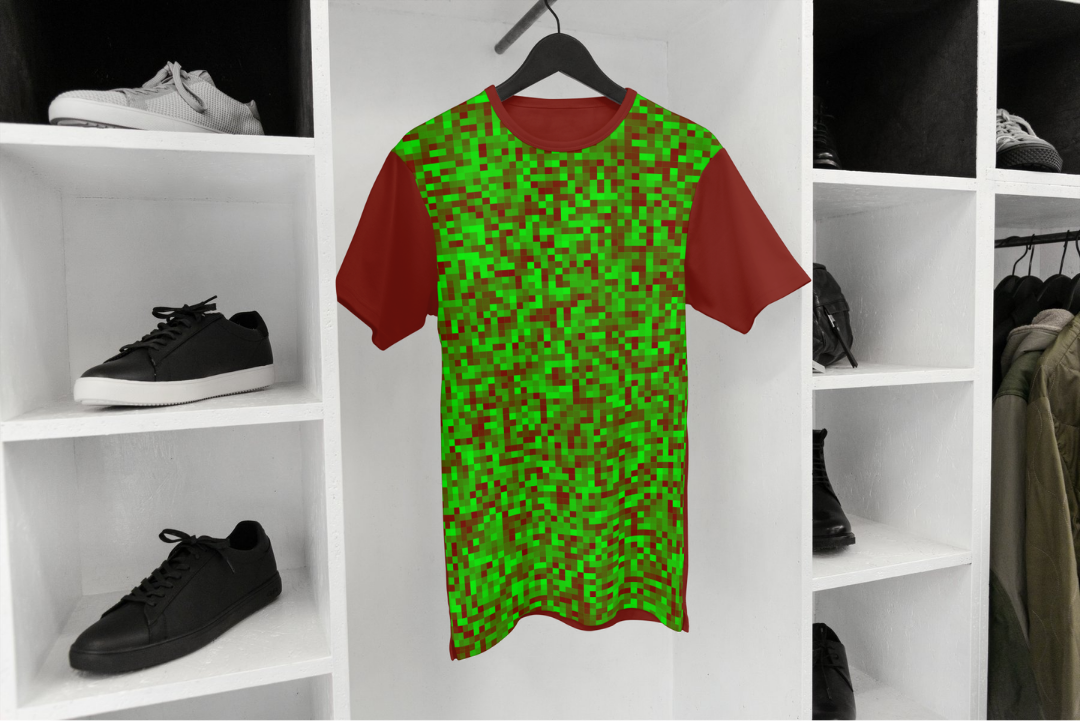
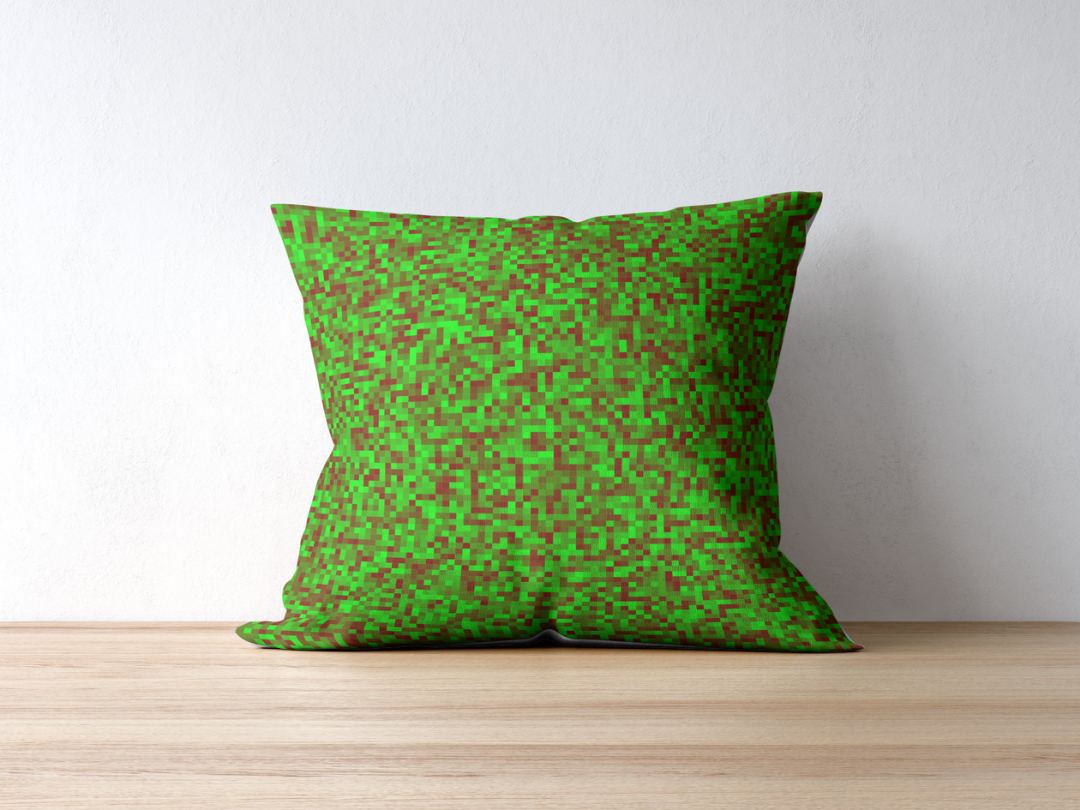
Each surface is drawn from the same numeric seed — reproducible, licensable, adaptable to your brief.