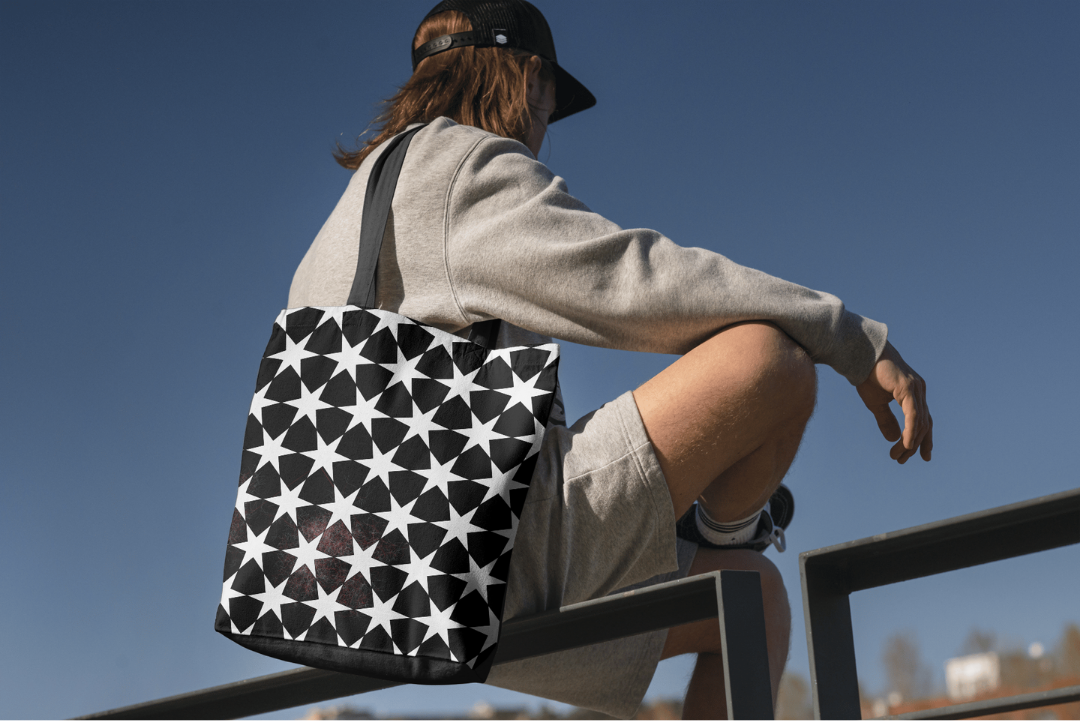
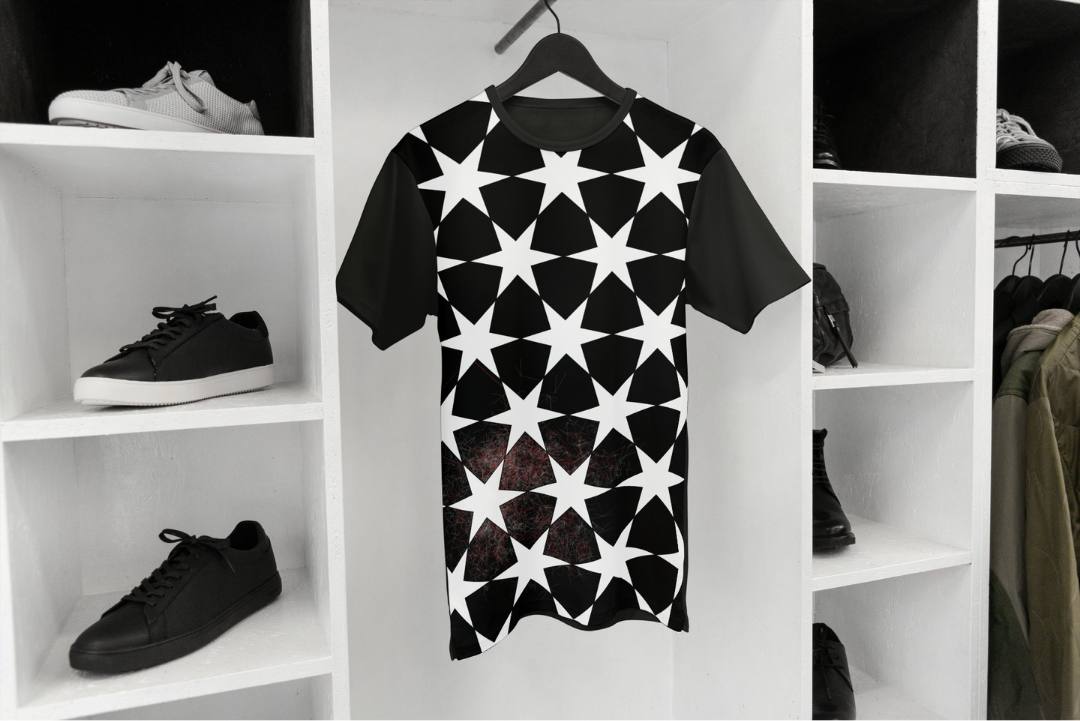
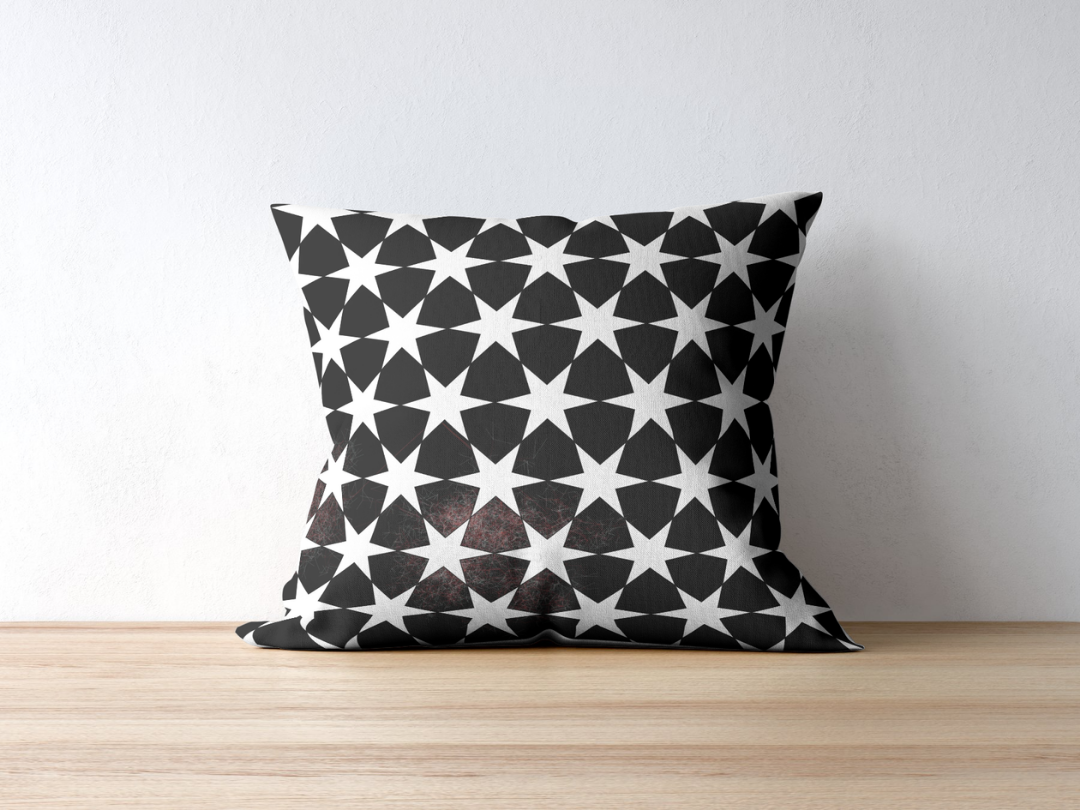
A girih pattern, repeated without end,
becomes a surface with its own light.
I am an Iranian-born artist working at the intersection of
classical Islamic geometric ornament and generative systems.
My work begins with a simple observation: the girih tile —
repetitive, mathematically structured, infinitely variable —
has always been a form of computation, long before computers.
Girih 2 renders three historic girih
patterns — the Umayyad mosque star, the simple hexagram,
and the Esreffoglu mosque interlace — each drawn as a
tessellating lattice of stroked motifs. A recursive tree
rises behind the pattern, its branches multiplying by
random subdivision, drawn in a light ground colour against
a saturated ground.
Behind the tree: a coloured field drawn from a curated
palette of historic CSS colour names — IndianRed, Crimson,
Sienna, DarkSlateBlue — paired with a pale companion
colour from a second list. The foreground pattern colour
is drawn from a small set of purples and blues. The result
sits between manuscript page and textile repeat. Each piece
is defined by a numeric seed and can be regenerated,
documented, and adapted for print, textile, and surface
applications.
On AI tools — where I encountered technical
obstacles, I turned to AI tools for debugging and code
optimization. Every structural, aesthetic, and conceptual
decision remained my own.