Variation
A random seed initialises the grid size, the palette pairing, and the initial cell density. Each composition is regenerated and documented as a distinct output.
Cells born, cells dying — four rules, drawn on a grid, captured at the moment the pattern settles into something worth weaving.
A cellular automaton study for fashion, textile and surface design. Conway's rules rendered as a catalogue of computational compositions — each run random-seeded, each plate reproducible.
Four rules. No designer. Yet the grid keeps producing form.
In 1970, John Horton Conway defined a zero-player game: each cell on a grid lives, dies or is born according to its eight neighbours. Nothing about the rule-set is visual — and yet the resulting patterns are among the most recognisable textures in computational art.
Game of Life is a companion volume to Arachne — the same interest in rule-based surface, approached through a different engine. Where Arachne layers rotating rings, this works cell by cell, generation by generation, until a stable, oscillating or travelling pattern emerges.
Each composition begins from a random seed, a random grid, and a randomly paired palette. The structure is entirely emergent — never drawn, always produced.

The same automaton, presented as an archival print — and applied across scarf, textile and wall surfaces at matched generation.
Every surface below is drawn from the same automaton generation — its repeat, orientation and scale adapted to the material, while the underlying structure remains identical.
A random seed initialises the grid size, the palette pairing, and the initial cell density. Each composition is regenerated and documented as a distinct output.
Four rules applied to every cell — birth, survival, death. The grid evolves through generations until a stable, oscillating or travelling pattern emerges.
The resulting composition becomes a surface-design asset — explored across garments, textile prints, wallpaper and other pattern-driven applications.
Game of Life is a generative design system rather than a single artwork. Its rule-based visual language can be adapted for fashion, textile development and other surface-oriented contexts — while maintaining a computational origin.
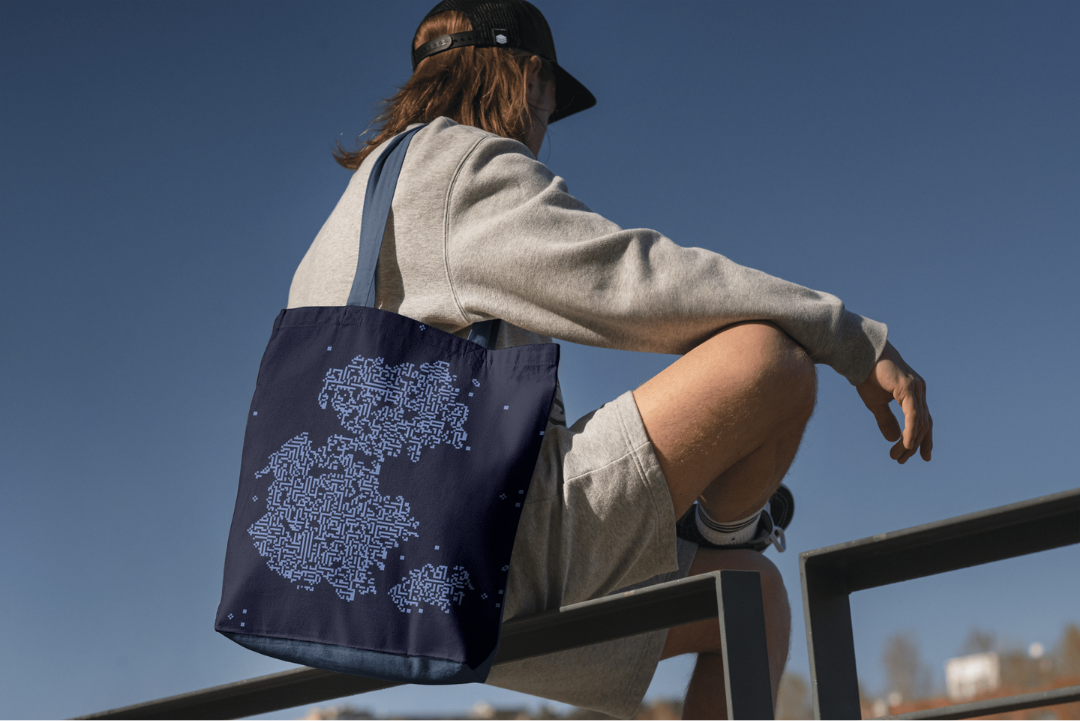
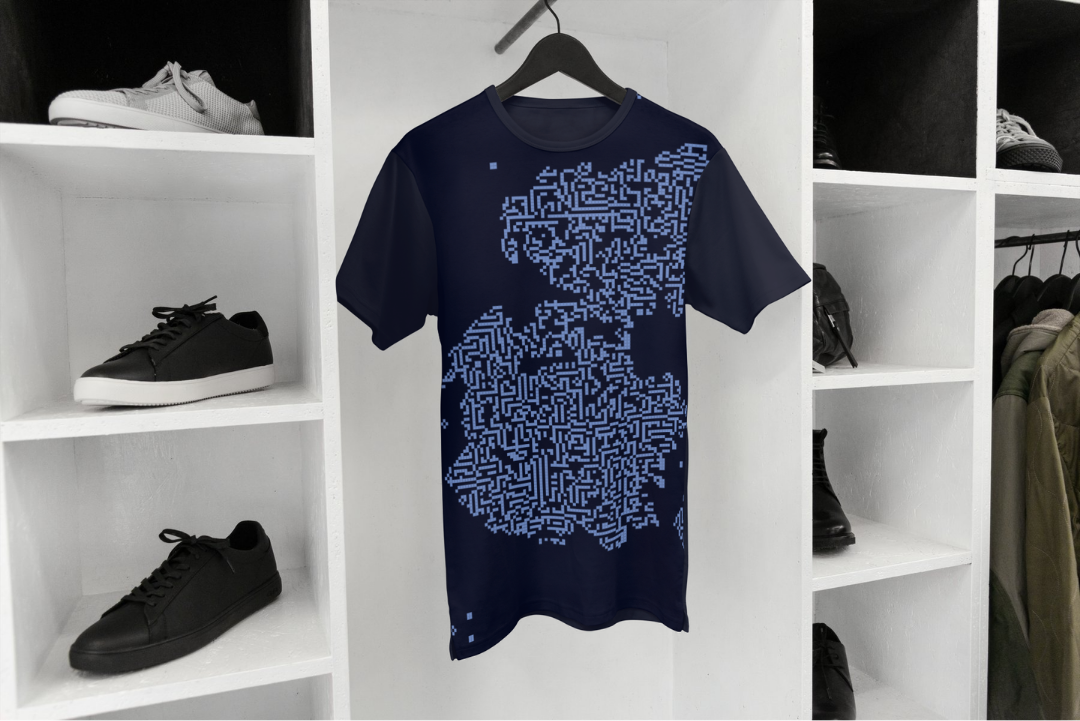
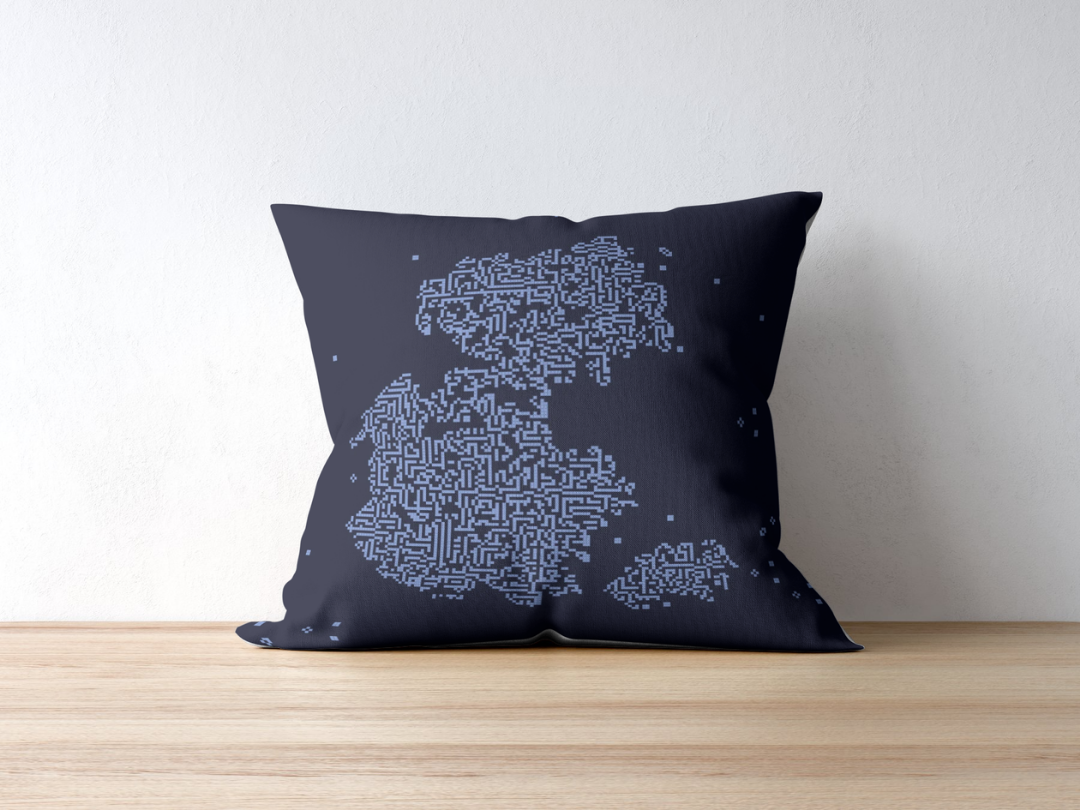
Each surface is drawn from the same automaton — reproducible, licensable, adaptable to your brief.