Food Grid — Catalogue 16 × 16 Tiles · 14 Foods · Seed-Based
A study in small food illustrations

Food Grid

A 16 × 16 grid of tiles, each containing a small illustrated food — apple, orange, pear, cherry, banana, strawberry, grape, avocado, donut, croissant, chocolate, macaron, sushi, cheese.

For fashion houses, textile studios and surface designers. Each composition is generated from a numeric seed and can be licensed, adapted or commissioned to your brief.

Issue Food Grid — Autumn 2026
Discipline Generative Illustration
Edition Seed-based · Open series
00 / Statement Artist Statement

A grid of small foods becomes a surface with its own kitchen.

I am an Iranian-born artist working at the intersection of illustration and generative systems. My work begins with a simple observation: the drawn object — small, recognisable, infinitely variable — has always been a form of computation, long before computers.

Food Grid renders a 16 × 16 grid of tiles, each containing a small illustrated food drawn from a list of fourteen options: apple, orange, pear, cherry, banana, strawberry, grape, avocado, donut, croissant, chocolate, macaron, sushi, cheese. Each tile has its own slight rotation, its own size variation, and its own colour from a harmonic palette of eight hues.

Behind the grid: a soft background wash in a random hue and low saturation. The result sits between illustration sheet and textile repeat. Each piece is defined by a numeric seed and can be regenerated, documented, and adapted for print, textile, and surface applications.

On AI tools — where I encountered technical obstacles, I turned to AI tools for debugging and code optimization. Every structural, aesthetic, and conceptual decision remained my own.
01 / Plate

Fourteen foods,
one seed.

02 / Surfaces

One grid.
Many surfaces.

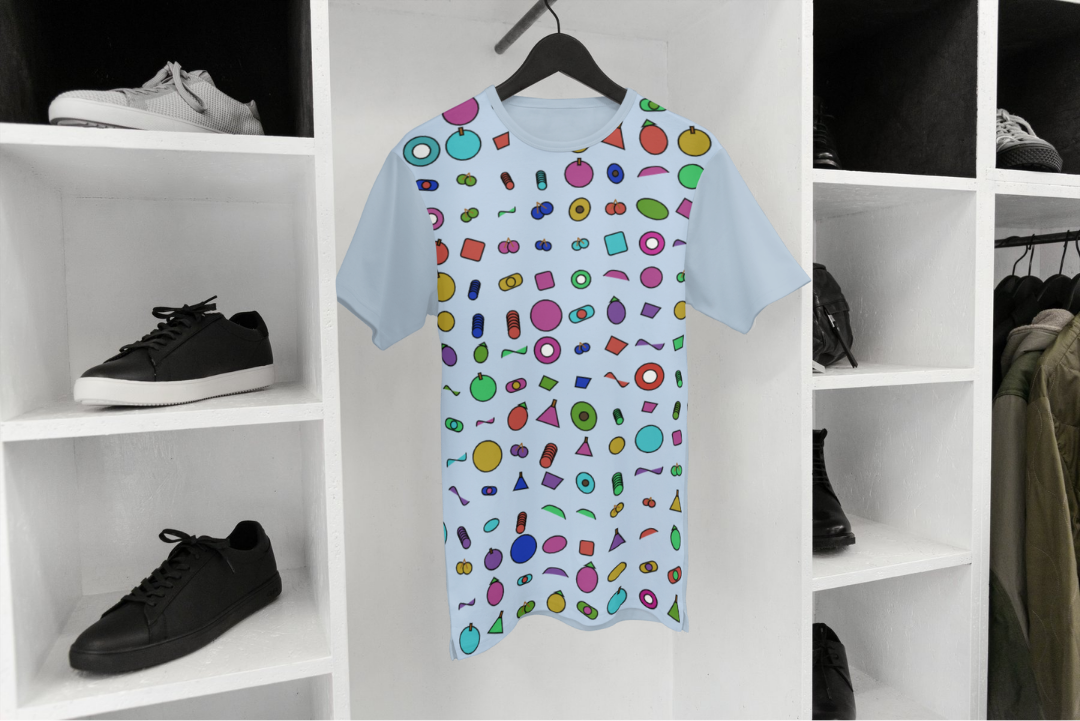
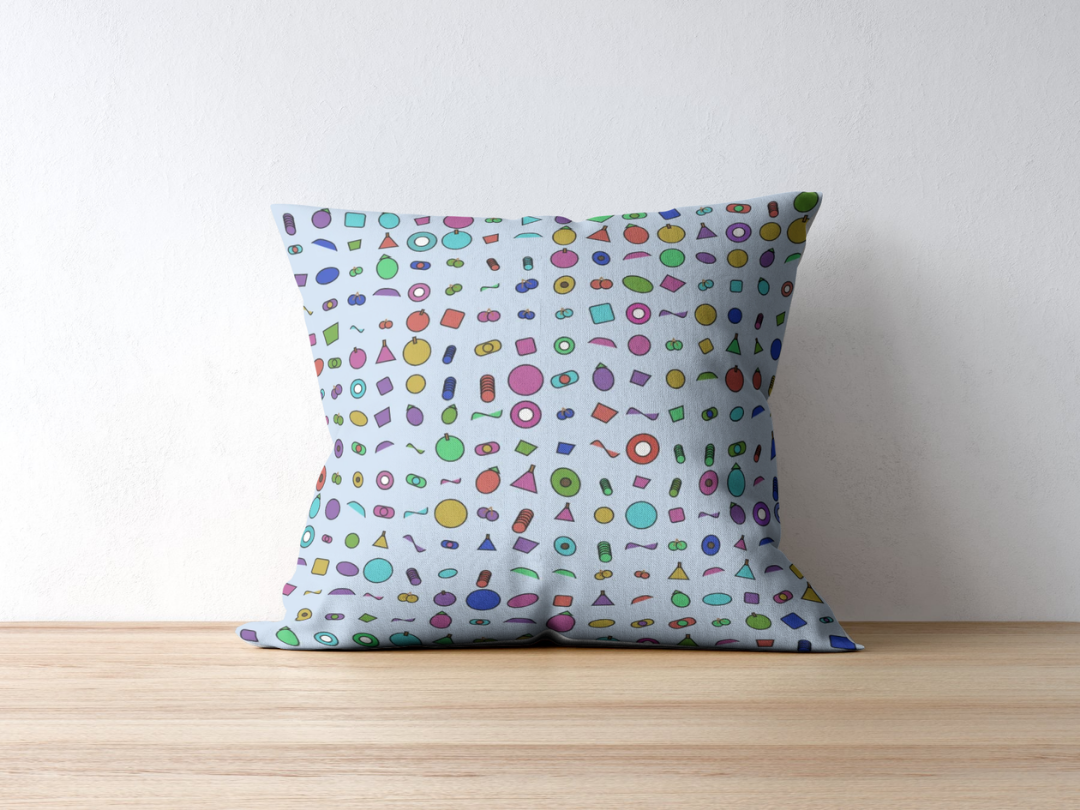
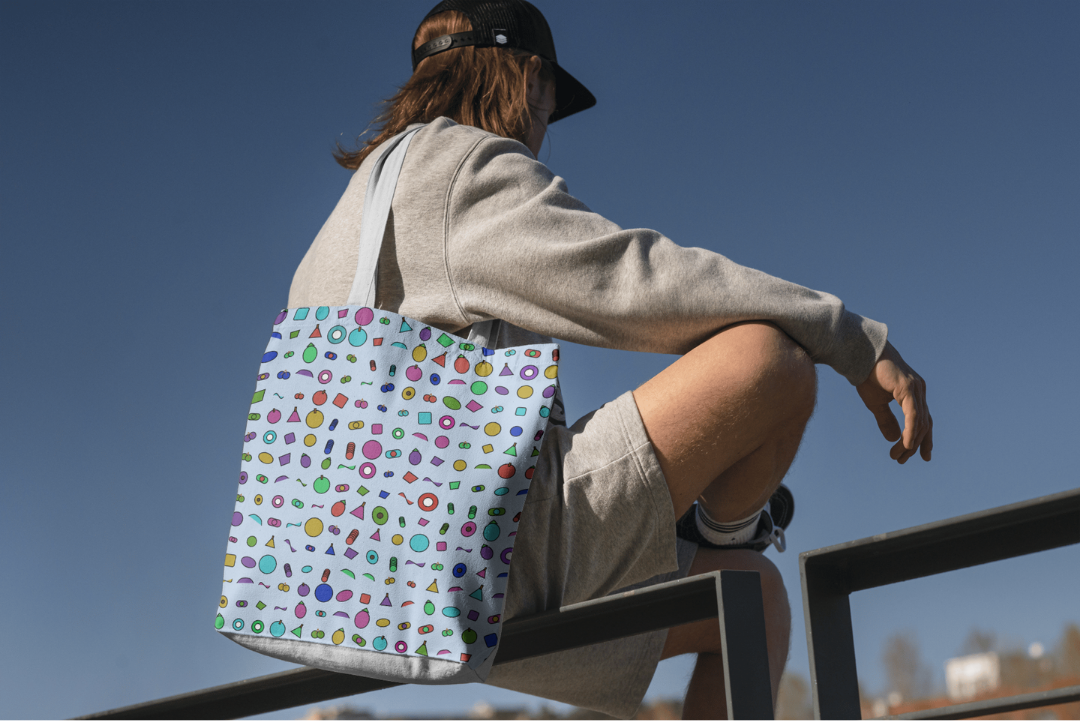
The same seed, presented as an archival print — and applied across fabric, scarf, textile and wall surfaces without loss of structure.

Plate 011 Archival print · 1 : 1 · Open edition

Applied across surfaces.

Every surface below is drawn from the same numeric seed — its repeat, orientation and scale adapted to the material, while the underlying structural logic remains identical.

iPrint
Archival print
1 : 1 · Cotton rag
iiScarf
Silk scarf
3 : 1 · Twill silk
iiiTextile
Fabric yardage
4 : 3 · Repeat tile
ivWall
Wallpaper
2 : 3 · Vertical repeat
03 / Process

Structure
behind the kitchen.

01 / Foods

Fourteen Options

Every tile draws a food from a list of fourteen: apple, orange, pear, cherry, banana, strawberry, grape, avocado, donut, croissant, chocolate, macaron, sushi, cheese. Each food has its own shape vocabulary — ellipses, triangles, curve vertices, rects — and its own optional accent (stems, leaves, pits, seeds).

02 / Palette

Eight Harmonics

Each seed produces a palette of eight colours at 45° hue intervals, from a random base hue. Saturation is drawn from 50–90, brightness from 60–95. Every food picks a colour at random from the palette, so the grid reads as a set of related objects in a shared world.

03 / Placement

Rotation & Scale

Each food is rotated by a small random angle (−30° to +30°) and scaled by a random factor (0.5–0.9 of the tile size). The rotation and scale variation make the grid feel hand-placed rather than mechanically repeated, while keeping every tile within its bounds.

04 / Archive

Selected
seeds.

8 compositions · Open series Click any plate to load it above
For brands & studios

One system.
Many surfaces.

Food Grid is a generative design system rather than a single artwork. Its illustrated vocabulary can be adapted for fashion, textile development and other surface-oriented contexts — while maintaining a computational origin.

i
Licensing Existing seeds from the archive, licensed for production use.
ii
Commission New compositions designed to your palette, repeat and product.
iii
Systems A private generative tool built for your studio's ongoing use.
Begin a Conversation