Variation
A numeric seed initializes the palette, line count, number of sine functions, orientation, and range of motion. Each composition is regenerated and documented as a distinct, traceable output.
A field of vertical lines whose heights are the sum of Fibonacci frequencies — slowly moving, algorithmically drawn, seed-documented, and ready for textile production.
For fashion houses, textile studios and surface designers. Each composition is generated from a single numeric seed and can be licensed, adapted or commissioned to your brief.
A line, when its height is summed from Fibonacci numbers, becomes a harmonic — mathematical, precise, quietly yours.
I am an Iranian-born artist working at the intersection of classical ornament and generative systems. My work begins with a simple observation: the harmonic series — layered frequencies, summed into a single wave — has always carried the structure of ornament. From the Fourier decomposition of a musical note to the harmonic ratios of a Persian garden, the sum-of-sines is one of the oldest systems of mathematical beauty we have.
Fibonacci Fourier is a seed-based generative system that translates that idea into code. Each composition is built from a vertical line field — dozens of tall strokes, each one whose height is the sum of a small set of sine waves whose frequencies are drawn from the Fibonacci sequence. Over time, the sines drift, and the line field ripples.
The palette, the line count, the number of sine functions, the orientation, and the range of motion are all derived from a single numeric seed. Each piece can be regenerated, documented, and adapted for textile, print, and surface applications — from scarves and yardage to wallpaper and archival print.
The same seed, presented as an archival print — and applied across fabric, scarf, textile and wall surfaces without loss of structure.
Every surface below is drawn from the same numeric seed — its repeat, orientation and scale adapted to the material, while the underlying structural logic remains identical.
A numeric seed initializes the palette, line count, number of sine functions, orientation, and range of motion. Each composition is regenerated and documented as a distinct, traceable output.
Each vertical line's height is the sum of a small set of sine waves, each at a frequency drawn from the Fibonacci sequence. The lines drift as the sines advance, producing a slow ripple.
The resulting composition becomes a surface-design asset — explored across garments, textile prints, wallpaper and other pattern-driven applications.
Fibonacci Fourier is a generative design system rather than a single artwork. Its harmonic, vertical-line visual language can be adapted for fashion, textile development and other surface-oriented contexts — while maintaining a computational origin.
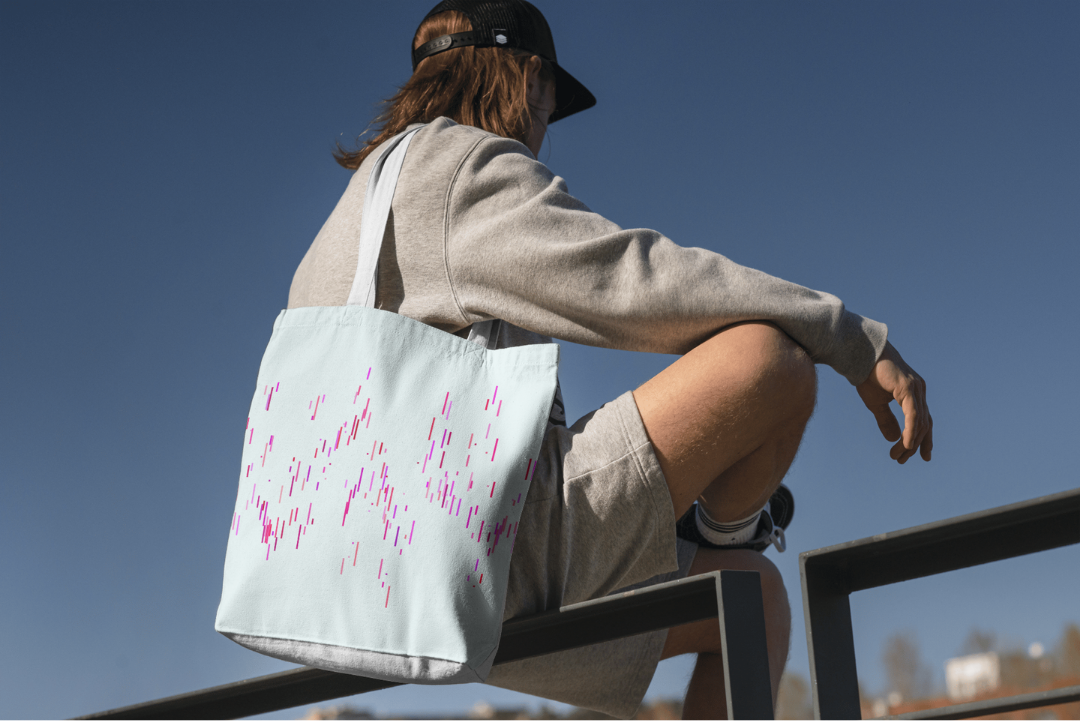
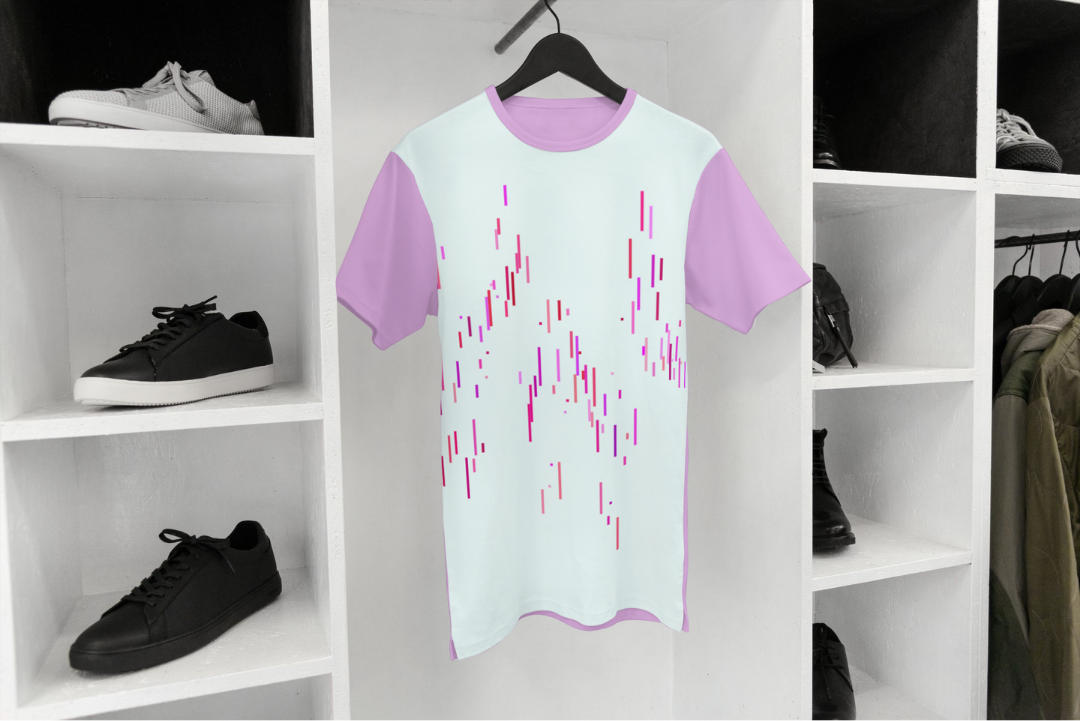
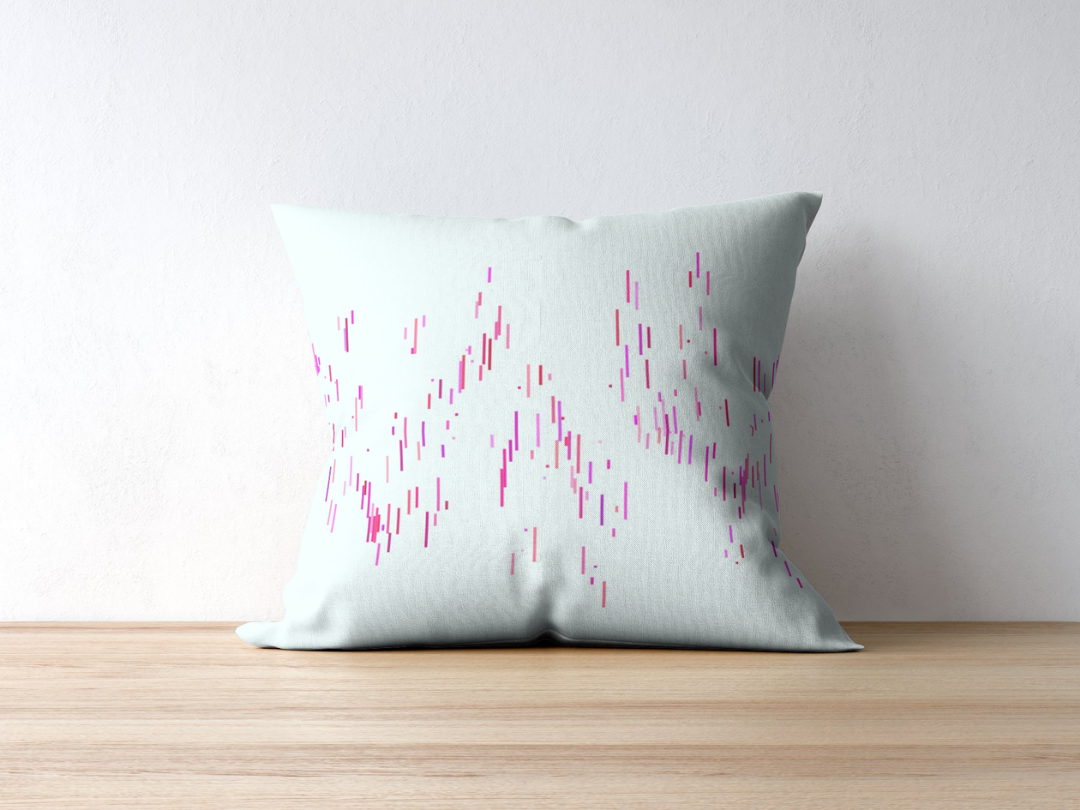
Each surface is drawn from the same numeric seed — reproducible, licensable, adaptable to your brief.