Variation
A numeric seed initializes palette, grid divisions, and colour mode. Each composition is regenerated and documented as a distinct, traceable output.
A cellular-automata system — rule-based tapestries of colour, algorithmically drawn, seed-documented, and ready for textile production.
For fashion houses, textile studios and surface designers. Each composition is generated from a single numeric seed and can be licensed, adapted or commissioned to your brief.
A rule, when it is repeated across a grid, becomes a tapestry — chaotic, precise, quietly yours.
I am an Iranian-born artist working at the intersection of classical ornament and generative systems. My work begins with a simple observation: the woven surface — repetitive, rule-bound, endlessly variable — has always been a form of computation. Every textile draft is a small program. Every pattern repeat is a loop.
ChaotiColor is a seed-based generative system that translates that structure into code. Each composition is built from a one-dimensional cellular automaton — a single row of cells that evolves downward, one generation at a time, according to a small set of binary rules. Where the rules meet, patterns emerge: triangles, filaments, spirals, sudden chaotic bursts.
Three modes govern the colour of the grid — black on colour, colour on black, or fully random RGB. The palette, the grid divisions, and the mode are all derived from a single numeric seed. Each piece can be regenerated, documented, and adapted for textile, print, and surface applications — from scarves and yardage to wallpaper and archival print.
The same seed, presented as an archival print — and applied across fabric, scarf, textile and wall surfaces without loss of structure.
Every surface below is drawn from the same numeric seed — its repeat, orientation and scale adapted to the material, while the underlying structural logic remains identical.
A numeric seed initializes palette, grid divisions, and colour mode. Each composition is regenerated and documented as a distinct, traceable output.
A one-dimensional cellular automaton — a single row of cells that evolves downward, generation by generation, according to a small binary ruleset. Simple rules, complex outcomes.
The resulting composition becomes a surface-design asset — explored across garments, textile prints, wallpaper and other pattern-driven applications.
ChaotiColor is a generative design system rather than a single artwork. Its rule-based, cellular visual language can be adapted for fashion, textile development and other surface-oriented contexts — while maintaining a computational origin.
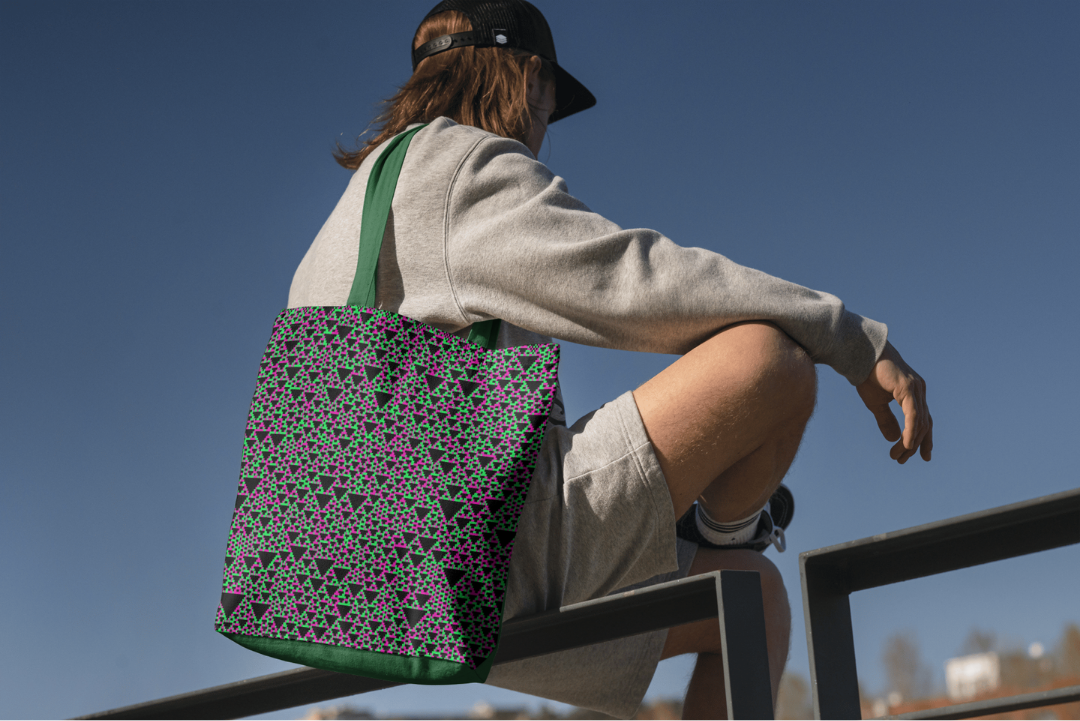
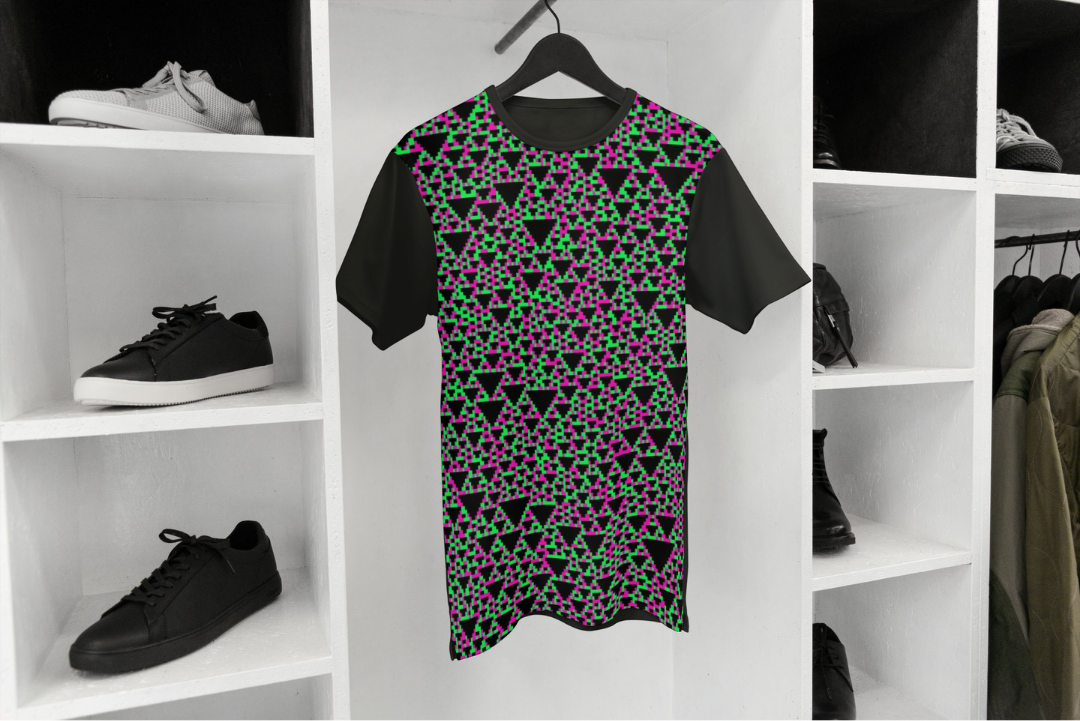
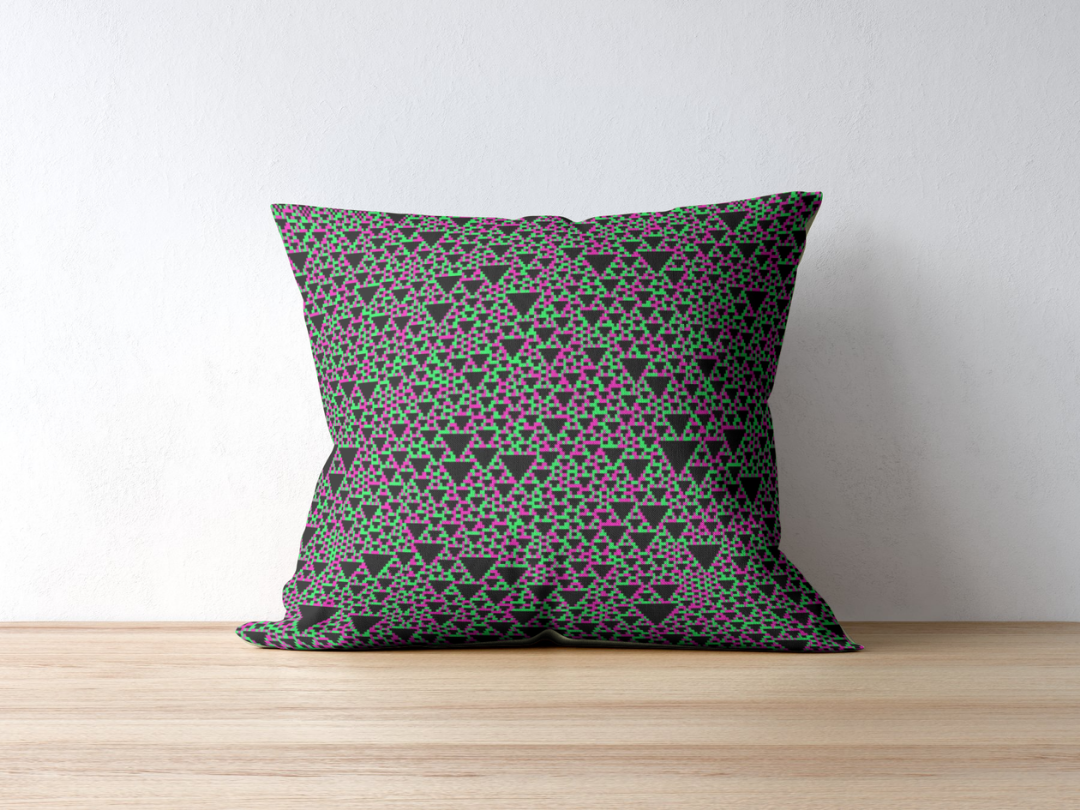
Each surface is drawn from the same numeric seed — reproducible, licensable, adaptable to your brief.